

Special Education Classroom Guide
A special education classroom should provide the support students need to successfully engage in learning activities, communicate more effectively and minimize behavioral problems.
With high-quality tools, devices, toys and electronics from Enabling Devices, you’ll have everything you need to support your students. This guide provides tips for making your special education classroom a welcoming, supportive environment where your students will thrive.
Special Education Classroom Setup and Decorating Ideas
The layout and decorations in your special education classroom help fulfill students’ learning needs. Here are some decorating ideas to keep in mind:
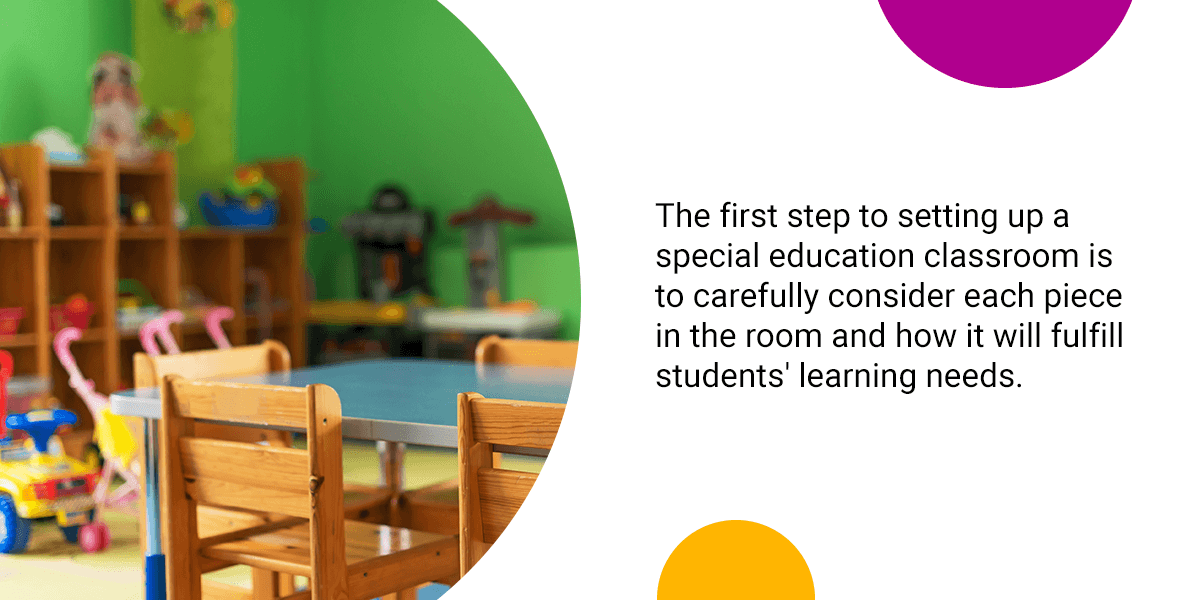
- Consider the actual and development age range: Many special education teachers have students of varying actual and development ages and abilities, so you’ll want to find appropriate room decorations for the students in your classroom. Before styling your room, learn what specific needs your students have. Some students may benefit from sitting near peers with similar abilities or using educational devices to enhance their learning.
- Determine the layout: Your special education classroom layout should include separate areas with specific uses, such as a play area or calming area. At the same time, be sure to leave space for children with mobility devices to navigate the room.
- Arrange the classroom to fit your teaching methods: Arrange your special education classroom to complement your teaching style. For example, if you want your students to collaborate, arrange desks closer together. If you prefer them to work individually, space out the desks.
- Create a fun, comfortable and calming environment: Your special education classroom should be comfortable, accessible and pleasant for students. Consider decorating with bright, fun colors or delineate sections by choosing different color combinations for each section.
- Feel free to brainstorm: Get creative with the themes available. For instance, a camping theme might incorporate different elements of nature, whereas a city theme might include areas that resemble a public park or town hall. Check out our blog post on back-to-school theme ideas for special education teachers to get inspired.
Rules for a Special Education Classroom
Meaningful routines and structure offer consistency and predictability for all children. Knowing what to expect will help students to feel relaxed, improve their social skills and better manage their behavior.
When creating rules for your classroom, consider the actual and development ages, needs and abilities of all students to accommodate everyone. For example, don’t expect students with certain mobility challenges to raise their hands before speaking.
Here are examples of special education classroom rules:
- Raise your hand or signal the teacher when you have a question.
- Look and listen during instruction.
- Use kind and positive language.
- Stay seated during activities.
- Keep your hands and feet to yourself.
- Bring your homework to school.
- Always try your best.
- Follow directions.
- Use your quiet voice.
- Be respectful to others.
Post the rules on the board to remind students to follow them.
How Can Schools Integrate Assistive Technology Into Classrooms?
Schools can integrate assistive technology into classrooms by implementing it in lesson plans and class activities. Special education tools can help students:
- Have a positive experience at school.
- Improve their focus and ability to absorb new information.
- Participate in ADL at home and school.
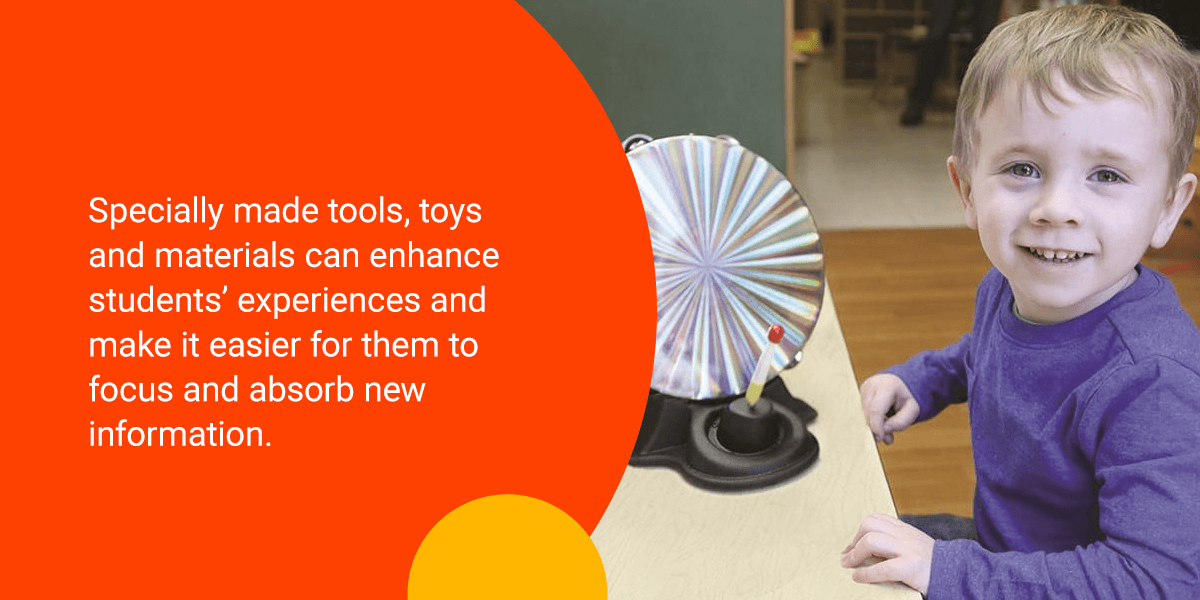
Try the following items in your special education classroom:
- Tactile Manipulatives: These tactile toys have textures that encourage tactile exploration while strengthening the hands and fingers. In the classroom, tactile manipulatives help students focus and reduce stress.
- ADL Boards: ADL Boards are beneficial for students of all actual and development ages with functional needs (commonly referred to as special needs). ADL tools allow students to enhance fine motor skills that they need to dress, such as zipping, snapping and lacing, which can also help them learn to grasp writing tools or press buttons on communication devices.
- ATL Bundle: These adaptive toys with switches can increase students’ visual and auditory attention and teach them about cause and effect.
- Finger Isolation Button: The finger isolation device is designed with a recessed button to help students learn how to master finger isolation and other fine motor skills needed for using touch-screen devices.
- Weighted Hand Writing Glove: A weighted glove is a must-have for any special education classroom. The glove offers proprioceptive input and compression to help students write and draw. Weighted gloves enhance maximum finger flexibility and wrist mobility and elevate strengthening exercises.
Ways to Support Your Elementary School Special Education Classroom
Introduce these strategies in your elementary special education classroom to make students from 5 to 10 years old feel comfortable at school and ready to learn:
- Use alternative aids: Using assistive devices for visual impairment or auditory aids in the classroom helps elementary school students engage, respond and be more interactive when learning.
- Create a predictable schedule: Children with functional needs benefit from a predictable routine in the classroom. When you anticipate a change in their routine, such as a field trip, special guest or substitute teacher, it’s best to let your students know in advance. Preparing them for these changes will help your students feel comfortable and prepared when the day comes.
- Provide plenty of opportunities for breaks: Children with special needs develop their skills on different timelines, so it’s important to offer a safe, calming area for them in the classroom, such as a sensory space. A sensory space offers relaxation tools for a break and lets students get their energy out before going back to the lesson.
- Consider environmental triggers: Are there any bright lights, extreme temperatures or loud noises in your classroom? These environmental factors can disrupt a child’s thought process and behavior, potentially leading to an emotional outburst. Decorate your classroom with warm lighting and use soothing music to help keep students calm.
- Use discipline gently but effectively: Elementary-age children of all needs and abilities may struggle to stick to certain rules and behaviors. Promote good behavior and use simple language, so students understand your expectations. Use a gentle tone, low volume and open body language to foster respect and trust.
- Make learning easier with tools, toys and devices: Young children can use toys and devices to practice communicating, learn skills for activities of daily living (ADL) and more. Calming toys help with focus, and communicators help students express their needs.
How to Improve Your Middle and High School Special Education Classroom
Middle and high school special education students may be aware of their different needs and abilities when around their peers. Here are some ways to make older students feel at ease, supported, empowered and engaged in learning:
- Use a mix of learning materials and tools: Your students will have different proficiency levels and abilities. A variety of books and resources can help students manage their assignments and activities. Modify or adjust assignments to minimize frustration and maximize confidence.
- Discuss disabilities openly and reduce stigma: Some middle and high school students with special needs may feel self-conscious about their abilities. As a special education teacher, it’s important to help all students understand disability. Talking openly about students’ needs and abilities can help them capitalize on their strengths and feel motivated to learn more about themselves.
- Use assistive tools and technologies: There are plenty of assistive technologies and products to aid students in learning, such as special education classroom kits for students who have sensory processing disorder, speech difficulties, visual impairment, Autism Spectrum Disorder (ASD) or cerebral palsy.
- Create a responsive classroom environment: Learn each of your students’ preferred communication methods. Some students may be verbal, and others may be non-speaking (commonly referred to as non-verbal) and use Augmentative and Alternative Communication (AAC) devices. Speaking their language can help your students build trust with you and feel more confident in participating.
How to Create an Inclusive Special Education Classroom
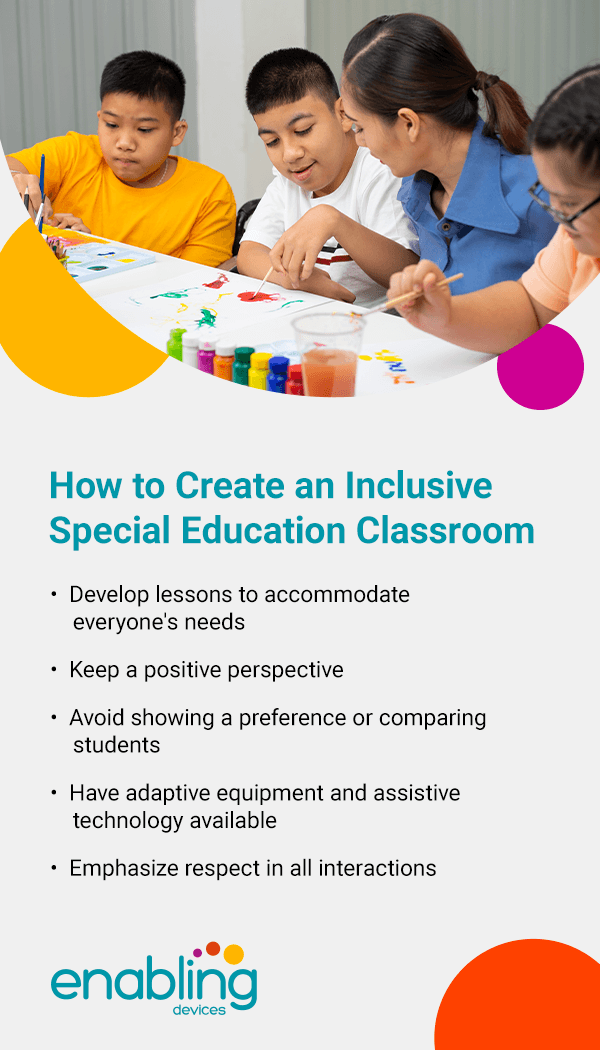
Teachers and educators play a valuable role in promoting inclusivity in special education classrooms and throughout the entire school. Here are some ways you can support inclusivity among students:
- Develop lessons to accommodate every student’s needs: It’s important for teachers to educate themselves on each student’s needs, limitations and boundaries. By understanding every student, you can build inclusive lessons and make alterations to assignments. You may also modify seating arrangements or develop creative ways to meet your students where they are.
- Keep a positive perspective: Modeling a positive attitude while teaching special education in the classroom is an effective way to help your students feel more confident in themselves and their ability to succeed in school. For example, if your students are not meeting learning outcomes as expected, focus on the big picture, such as the fact that they are engaging in your classroom and learning something new.
- Avoid showing a preference or comparing students: Special education teachers need to ensure they treat all students the same. Favoritism can make students feel excluded and create a divisive classroom. Working with all your students equally helps them learn and grow.
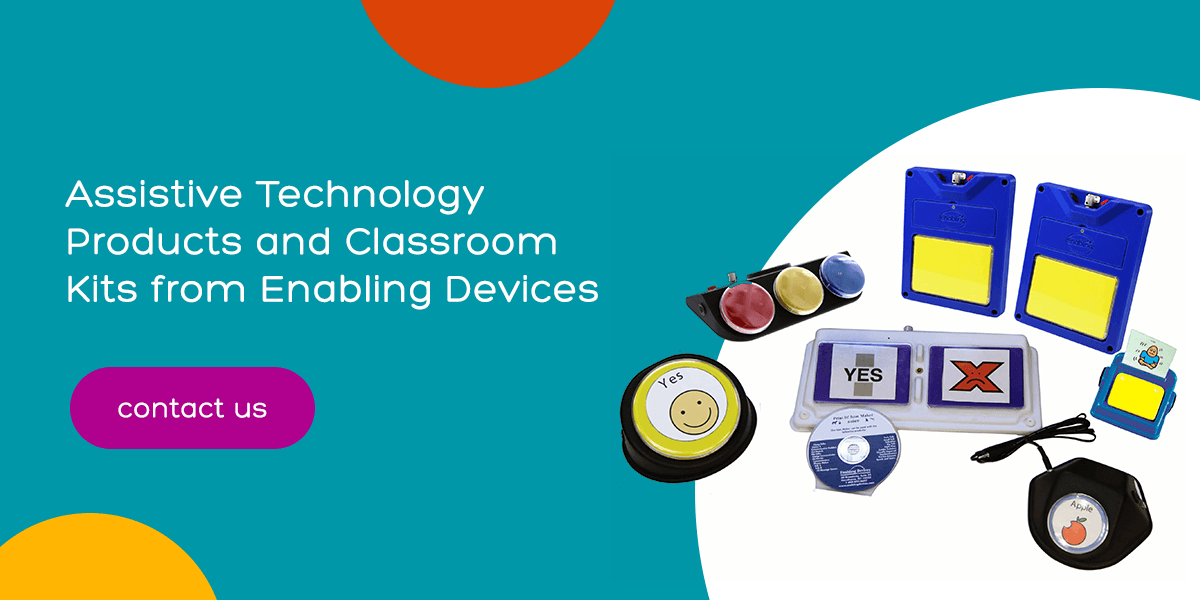
- Have adaptive equipment and assistive technology available: Your students may have varying needs and abilities for speech, vision, hearing or mobility. Providing appropriate adaptive and assistive devices helps promote inclusion and allows all students to engage in activities. Some of these devices might include capability switches, communicators and boards.
- Emphasize respect in all interactions: Remind students to humanize their peers who might have different abilities from them. Encourage students to introduce themselves and be respectful of others’ feelings, even if they don’t know at first how to speak to or include a classmate with disabilities.
Teaching Strategies for the Special Education Classroom
Your teaching methods may vary depending on the actual and development age group and special needs of your students. Explore these general teaching strategies you can practice in your special education classroom:
- Group students according to their abilities: Form small groups of students according to their needs, abilities and skill levels. Structuring by ability can help your students avoid comparing themselves to others and instead focus on their group and their assigned activity.
- Create specialized areas around the classroom: Designate certain areas of the classroom for specific activities and instruction. Each space should specialize in one level or subject with appropriate learning materials.
- Review the previous lesson: Go over what students have learned before starting the next lesson. These review sessions help teachers determine if every student is ready to move on. Emphasize key points of the lesson and check in with your students to ensure they understand.
- Provide follow-up directions: After instruction, repeat yourself or provide additional directions so your students are confident in what they need to do. Remind students to ask for help if they do not understand your directions.
How to Support Students With ADHD in the Classroom
Students with attention-deficit/hyperactivity disorder (ADHD) may present an impaired ability to listen, focus or finish a task. They may also fidget or display disruptive behaviors in class. Here are some special education classroom ideas for teaching students with ADHD:
- Personalize their learning: Students do not learn in the same way and have strengths in different areas than others. Consider hands-on, interactive activities with manipulatives to help keep students with ADHD focused and engaged.
- Offer choices: Assignments with many steps can be overwhelming for students with ADHD. Try offering several ways for them to finish an assignment. When learning math, for example, allow them the choice of using a calculator, writing problems on the board or working quietly on a worksheet.
- Accommodate their attention span: Students with ADHD will perform tasks more effectively without distractions. Give them a quiet area to work, allow them extra time to finish or split up the assignment into separate stages.
- Reward students for good behavior: Many children with ADHD may become accustomed to constant correction or scolding for their behavior. You can make a huge difference in their learning by focusing on their positive behaviors. Offering praise for even minor accomplishments can motivate them to continue these behaviors.
Prepare Your Special Education Classroom With Products From Enabling Devices
When schools integrate assistive technology into classrooms, it makes learning accessible and inclusive for students of all abilities. Enabling Devices is proud to offer assistive technology, adaptive devices and other products that help individuals with disabilities communicate, learn and play. Our goal is to create products that align with the unique needs of every student with disabilities.
Contact us today to learn more about how our devices can help enhance learning and unlock potential for your students.