
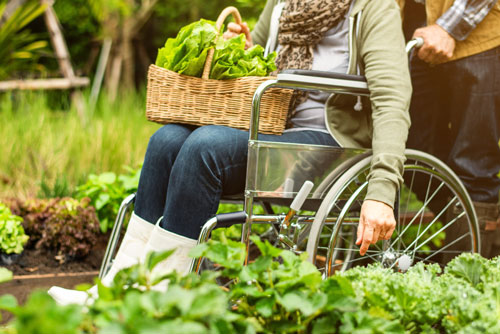
Spring is a spectacular time to get outside and garden and thanks to adaptive gardening tools and techniques, there’s no reason for your disability to hold you back. There’s even a discipline called horticultural therapy! That’s because the mental and physical health benefits of gardening have been recognized for thousands of years.
If you’ve never heard about adaptive gardening, here’s all the (ahem) dirt!
First things first: Before you begin a gardening project, consider what will work best for your body and space. For example, if you use a wheelchair and cannot get down on your hands and knees, consider raised beds. These can be constructed at whatever height is best for you. Besides being accessible, raised beds have significant benefits for growing plants and veggies. They provide better soil quality, since you can choose to put in high quality soil and avoid potentially poor-quality native soil; offer better drainage and therefore are less likely to become waterlogged; warm up more quickly, making soil ready for planting earlier; and can be easier to maintain because weeds and pests are often reduced.
Another excellent option is container gardening. Pots, planters, window boxes, and grow bags can be placed on patios, balconies, decks, or tabletops, making gardening possible even if you don’t have a yard. Containers are especially helpful for people with limited mobility because they can be positioned at a comfortable height, reducing the need to bend or kneel. Lightweight containers made of resin or fabric are easier to move than heavy ceramic pots, and wheeled plant caddies can make repositioning larger pots much simpler. Herbs, lettuce, tomatoes, peppers, strawberries, and flowers all grow beautifully in containers.
Adaptive gardening also includes using the right tools. Many standard gardening tools now come in ergonomic or modified versions designed to reduce strain and improve comfort. Look for tools with padded, easy-grip handles, extra-long handles to reduce bending, or lightweight materials that are easier to lift and control. Some gardeners prefer tools with forearm cuffs or strap-on grips if grasping is difficult. Ratcheting pruners can make cutting stems and branches easier for people with arthritis or reduced hand strength.
If standing for long periods is difficult, a rolling garden seat or sturdy stool can help conserve energy. Kneeling pads and garden benches with side handles can also make transitions easier. Reachers or grabbers are useful for picking up dropped tools, pulling weeds, or reaching items stored on shelves.
Watering can be another challenge, but there are adaptive solutions for that too. A lightweight hose with an easy-squeeze nozzle, drip irrigation system, or self-watering containers can reduce lifting and repetitive effort. Timers can automate watering, saving both time and energy.
It’s also smart to think about layout. Keep pathways wide and level for walkers or wheelchairs, place frequently used tools within easy reach, and group plants with similar watering needs together to simplify care. Small changes in setup can make a big difference in comfort and independence.
Most of all, remember that gardens don’t have to look one particular way. Whether you grow tomatoes in a raised bed, herbs on a sunny windowsill, or flowers in a few containers by the front door, you are gardening. Adaptive gardening is about making the hobby fit you—not the other way around.
If you live in or near Westchester County, New York, the Team Nikhil Foundation is holding an adaptive gardening event for children ages 3 and up in Bedford, New York, on Saturday, May 30, 2026. Visit teamnikhil.org for more information.