
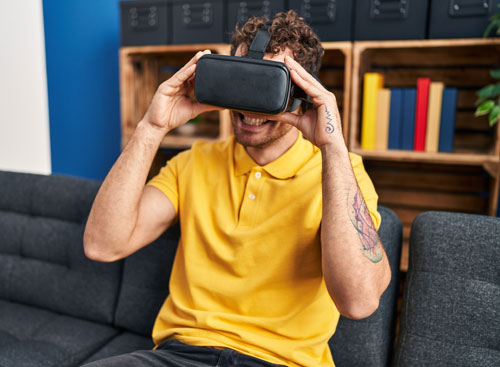
When many people think of virtual reality, they picture video games or entertainment. But at Kennedy Krieger Institute in Maryland, VR is being used for something far more practical: helping adults with developmental disabilities build confidence, learn everyday skills, and connect with peers.
A small group of participants in the institute’s CORE (Community, Opportunity, Respect, and Employment) Foundations program is currently taking part in a pilot project that uses virtual reality headsets to teach real-world skills. The adults, who have autism and Down syndrome, are using the technology to practice situations they may encounter in daily life, such as crossing a street, riding public transportation, and preparing for workplace settings.
For many individuals with developmental and intellectual disabilities, learning these skills can feel stressful or intimidating. Practicing in a virtual environment creates a safer, lower-pressure space where participants can learn through repetition. They can try a task, make mistakes, and try again without the risks or social pressures that sometimes come with real-world environments. That kind of practice can help build both competence and confidence.
Another advantage of virtual reality is that it can be highly individualized. Training sessions can be adjusted to match each person’s goals, comfort level, and learning style. This personalized approach recognizes that people learn in different ways and that effective support should reflect each individual’s strengths and needs. Some participants may find that VR helps reduce anxiety, while others may simply find it a more motivating or more fun way to learn.
As we’ve discussed here before, once many people with disabilities age out of programs designed for children and teens, they are too often left adrift, without meaningful opportunities for employment, independence, or community involvement. That gap in services can be frustrating for individuals and families alike. Tools like VR may help bridge that gap by offering training that prepares adults for greater participation in everyday life and prospective workplaces.
The project may also contribute to future research on how virtual reality can be used with adults who have intellectual and developmental disabilities. As more organizations begin exploring these tools, they may discover additional ways to support employment readiness, independent living skills, and community participation.
The project’s benefits are not just practical though. It also gives opportunities for socialization. Learning with peers can encourage conversation, shared experiences, and even friendship.
As Enabling Devices and our customers know, technology works best when it helps people live richer, more independent, and more connected lives. VR training could offer a way forward.