
Getting around an airport is challenging for anyone. But imagine trying to navigate an environment like this when you’re blind, visually impaired or deaf-blind?
A recent Disability Scoop story highlighted an innovative training exercise in the Orientation and Mobility (O&M) certification program at Portland State University. As reported by Anusha Fathepure of OregonLive, students in the program visited Portland International Airport to experience firsthand what air travel is like for people with blindness and low vision.
According to its website, the Orientation and Mobility certification program at Portland State University, in Portland, Oregon, trains students to teach people who are blind or who have low vision to travel “safely, confidently and independently.” The hybrid (combined in-person and remote) program is one of 12 such programs in the United States and the only one in the Pacific Northwest.
Students in the graduate level program study the theory and practice of sensory development, human movement, and spatial orientation. They learn to evaluate clients’ mobility needs, teach cane and travel skills, and use low-vision devices and assistive technology to make traveling easier.
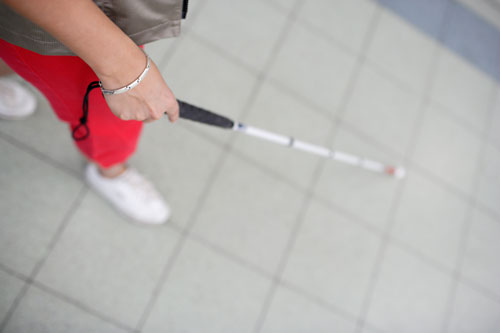
During the airport visit, students were blindfolded, given canes, paired with human guides, and encouraged to use navigation apps such as GoodMaps and Aira as they negotiated the busy terminal and TSA screening process. The simulated experience exposed them to the sensory overload created by large crowds, constant announcements, construction noise, alarms, and the stress of navigating an unfamiliar environment.
Student Megan Becker told Fathepure that the experience was “overwhelming.” A walk through the terminal that would normally take her about nine minutes stretched to 25 minutes while she was blindfolded.
Although Becker’s guide, Jasmine Low, could have gotten them through the airport much faster, she deliberately allowed Becker to lead the way.
“Independence is the foundation of everything we do,” said Low. “… As you think about the life of a blind student, they’re being dragged around by their parents. They’re being told what to do at school, and they don’t get to make those decisions for themselves on when they’re going, where they’re going.” O&M specialists aim to enhance their clients’ self-determination.
The visit also included instruction from Professor Amy Parker and a tour led by Port of Portland terminal operations specialist Jill McPherson, who introduced students to the airport’s accessibility features. These included hearing support systems, tactile and touchscreen maps, and even a sensory room with a mock airplane where anxious and neurodiverse travelers can prepare for the flying experience before boarding.
Air travel continues to present significant barriers for many people with disabilities. But programs like Portland State’s, and airports that invest in meaningful accessibility features can create a more positive and inclusive travel experience.