How to Include Students With Disabilities in the Classroom
Most classrooms have students without disabilities and students who have functional needs (commonly referred to as special needs). To help every child reach their full potential, teachers must have a strategy for navigating differences in ability and supporting each child in their individual learning journey.
As a teacher, you have the opportunity to help students interact with classmates who have special needs. Your focus on fostering an inclusive classroom impacts how students see themselves and what they prioritize during the school year.
How Can Teachers Make the Classroom Inclusive?
Teachers can make their classrooms more inclusive by setting boundaries and creating systems at the beginning of the school year. Think about how you want students to feel, what you want them to learn and how you will accomplish those goals.
Here are six ways you can make your classroom more inclusive for students with disabilities:
1. Accommodate Lessons to Ensure They Meet Everyone’s Needs
Before teachers can accommodate their students’ needs, they must first understand their needs and limitations. Make a point to coordinate with the school’s specialists to build inclusive lessons that will provide the needed accommodations for all students. These specialists may include:
- Occupational therapists
- Speech therapists
- School psychologists
- Special education instructors
- Reading specialists
You may also have an additional teacher in the classroom to assist them or use specialized technology to obtain information. If another teacher is assigned to work with one of the students in the classroom, work closely with them to ensure you’re meeting their individual needs.
While a teacher may need to make certain alterations to accommodate a student’s special needs, it’s essential to keep the general theme of the lesson the same for everyone to promote an inclusive atmosphere. When your students have a common goal, they’ll feel like an engaged and cohesive group.
2. Avoid Stereotypes About Functional Needs
Whether you’ve been teaching for two months or 20 years, you may have formed some preconceived notions about students with special needs and how to interact with them. It’s important to start fresh with every student — not every person with disabilities is the same.
Remember that each of your students — regardless of their physical and mental abilities — is a human being with different:
- Learning styles.
- Likes and dislikes.
- Ways of engaging with the world.
When you learn what makes your students tick, you’ll understand how to motivate them and engage with them on their learning journey.
3. Model a Positive Attitude
When you have a positive attitude, you teach your students to face each day with courage, kindness and hard work. Believe each student is capable of succeeding, and regularly evaluate your teaching plan for better ways to motivate them.
Although some students struggle more than others, there’s no benefit to blaming a student or their disability. Regardless of how students with disabilities engage with their class or what information they retain in the long run, your role is to teach them something they didn’t know before and prepare them for what’s ahead.
4. Maintain an Inclusive Atmosphere at All Times
Children will mimic the behavior they see in the adults around them. If a teacher includes all students in activities and strives to maintain an inclusive atmosphere in the classroom, then students will follow suit. If a teacher excludes certain students from certain activities or shows a preference for specific students, they risk cultivating a divisive classroom.
A great way to create an inclusive environment is to incorporate games and interactive activities into lesson plans. Games and activities help students learn about each other’s strengths, understand their personalities and develop unity among students. When children have fun together, it helps them grow closer to each other, regardless of their abilities.
5. Talk About Disabilities With Students in a Healthy Way
You can maintain a positive environment by prioritizing healthy discussions about students with disabilities in the classroom. Teachers can help students form positive feelings about peers with disabilities, instead of fear or awkwardness.
Encourage healthy communication strategies with the following tips:
- Humanize others: When students notice children who are different from them, inspire them to treat them like other classmates. For instance, you could tell students to introduce themselves and ask questions. Remind them of the similarities between everyone despite appearances.
- Normalize confusion: Your students might feel confused about the best way to include or speak to kids with disabilities. Let them know that confusion is okay, but it’s important to overcome it and welcome others.
- Use respect: Emphasize that respect is the most important aspect of all interactions. While it’s okay to ask questions, remind students that everyone’s feelings should come first. They should treat every person they meet with respect and think about how their words might impact others.
6. Have Adaptive Equipment and Assistive Technology in the Classroom
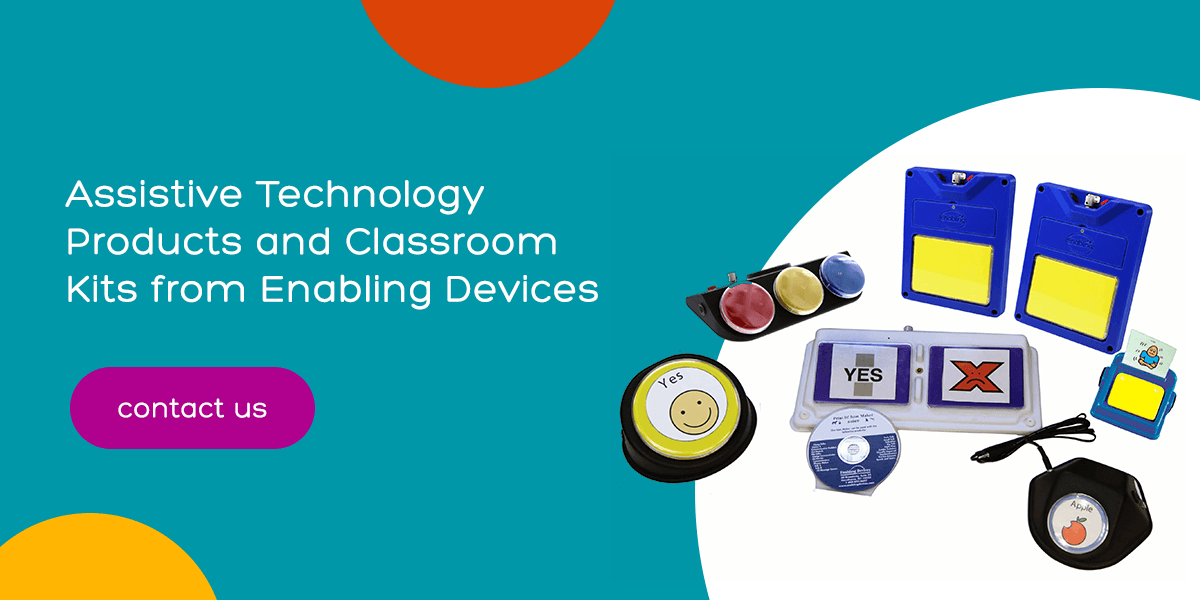
While the appropriate adaptive equipment and assistive technology depends on each student’s individual needs, these tools go a long way in helping students with functional needs learn. Assistive technology and adaptive equipment in the classroom ensure that students with varying levels of ability can be included in many different activities.
Check out a wide variety of products and classroom kits to find the equipment you need at Enabling Devices.
How to Help Students Interact With Classmates Who Have Special Needs
Teachers can model respectful and kind behavior to help students respond to their classmates with functional needs. Be a model for your students by teaching the following in your classroom:
1. Remember That Everyone Is Human
How do you show acceptance and respect for others to a child? You can model this behavior in your interactions with everyone at school, including:
- Other teachers
- Janitorial staff
- Principals and superintendents
- Administrative staff
- Other students
When children see their teacher modeling respect for everyone, they will be more likely to emulate this acceptance and kindness with all of their classmates, regardless of any special needs they might have.
With younger children, play is a valuable tool. Young children form relationships and can develop a better understanding of their peers with disabilities when they engage together through play. Look for opportunities for your young child to engage and interact with other children and adults who are different from them.
2. Use an Engagement Style That Matches Your Personality
The best way for children to engage with students who have special needs is to just be themselves. A child’s disability does not necessarily change their ability to respond to others around them. For instance, a child with speech and language disabilities can still participate in conversations with others using their adaptive equipment.
Encourage students to find ways to engage with classmates that are reflective of their personality. For example, a child who tends to be quiet but loves to help might do better by offering assistance to a peer with special needs during a classroom activity. On the other hand, a child who tends to be more talkative and outgoing may choose to engage in conversation with a peer who has special needs.
3. Recognize and Respect Boundaries
Although it’s important for children to be inclusive of others, it’s also vital that they learn to understand that their classmates may have boundaries and struggles that don’t always go well with a student’s personality. For example, children with Autism Spectrum Disorder (ASD) don’t usually like to be touched. An affectionate child might like to hug or touch other children, but a child with special needs might not welcome touches.
Because children spend so much time in the classroom together, they often pick up on these preferences just from watching their classmates. However, it’s still important to remind them to be alert and aware of how their behavior can affect their classmates.
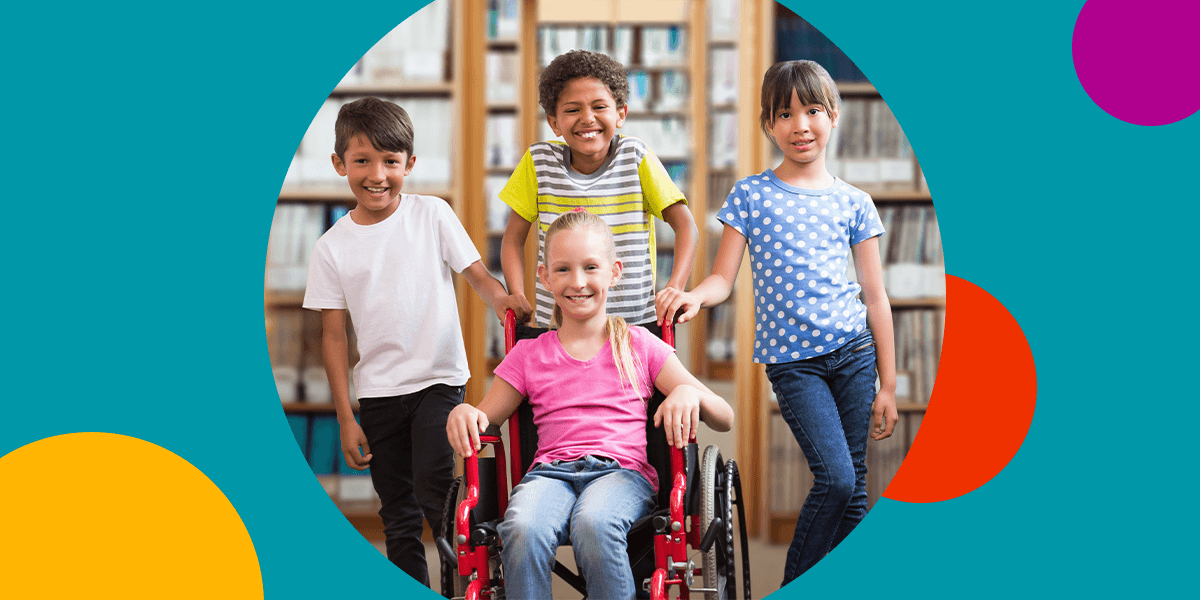
For example, you can teach students about supporting a child who uses a wheelchair. Teach them to think of the wheelchair as an extension of their classmate’s body. In this case, boundaries would include:
- Do not lean on the wheelchair.
- Do not deface the wheelchair.
- Do not use the wheelchair or ask to ride in it.
- Never grab for the chair or attempt to push the user without permission.
4. Use the Universal Language of Music
In some cases, music can be a great way to bridge the gap between classmates of varying abilities and needs. Even if a child is non-speaking (commonly referred to as non-verbal) or has physical limitations, they can still connect with music because it is universally understood. They can enjoy the antics and voices of their classmates, and they can connect with the words, even to silly songs.
As children grow older, students without disabilities and students with functional needs may also be able to bond over the love of a particular genre of music or a band they both enjoy. Connecting over music can be especially helpful for tweens and teens who are looking for ways to get to know a classmate with special needs.
5. Don’t Be Afraid to Talk
Even if your students have a classmate who is non-speaking, you can encourage them to engage in conversation together. Talking to another person demonstrates an interest in them and helps to establish a connection. Remind them that it doesn’t have to turn into a 20-minute discussion — even a brief interaction can go a long way.
That being said, teach students to be sensitive to their classmates if they are deaf or have hearing impairment or have sensory needs, because conversation in a crowded or loud space may do more harm than good.
Here are some ways students can talk to their peers with disabilities:
- Ask the student about their day.
- Say “Hello” and tell a brief story about something that happened at the bus stop that morning.
- Look for opportunities to talk in quiet face-to-face settings, such as during assignments that require a partner to complete them or by inviting them to play an educational game during a free period.
Parents of students with special needs are typically receptive to questions from their child’s classmates. These questions give them the opportunity to inform others and help them develop a more accurate understanding of what makes their child unique. It doesn’t take a well-scripted list of questions to approach another parent. Many times, a simple “Hello” is all you need to open the door to conversation.
6. Recognize Each Student’s Unique Limitations
Children of all actual and development ages have limitations, which are often magnified because of the student’s physical or sensory needs. It’s the teacher’s responsibility to manage these limitations. However, students can be taught about these limitations, so they can understand what’s happening and not allow it to mar their opinion of their classmates.
For example, students who are deaf or hard of hearing may not be able to follow a conversation in spoken English, but they can still engage in active play at recess. Their classmates can also learn a few basic signs so that they can communicate with them.
If students have a classmate with ASD, you may want to prepare them for how to respond to episodes where they seem to be out of control. When these outbursts happen, children without disabilities can understand that these outbursts are simply a part of their disability.
How Can Parents Teach Their Kids About Disabilities?
Parents should take advantage of resources and open conversations to teach their kids about functional needs. Although teachers have children in their classroom for hours each week, it’s ultimately their parents who will shape their view of the world and the people around them.
Share these tips with parents about how to explain special needs to a child.
Many children’s books, online videos and TV shows talk about functional needs to help children understand these conditions and learn how to interact with them. For example, Sesame Street has many positive portrayals of children with special needs, so it’s a great resource for younger children.
Afterwards, parents should talk with their child about what they learned in the book or video. The conversation can include questions like:
- What do you think or feel about what you’ve learned?
- How can you apply what you’ve learned at school?
- How will what you’ve learned change how you interact with your peers with this disability?
2. Focus on the Basics Instead of the Details
Every child is different, so they’ll process information differently. Children — especially younger ones — may easily become overwhelmed or confused if given too much information. The goal here is not to turn your child into an expert on disabilities. The goal is simply to help them realize that every child is different and that those differences should be celebrated, not avoided.
3. Teach Your Child That Everyone Is Different
Every person — with or without disabilities — is unique. Embracing others’ differences is an essential life skill. Even if your child isn’t interacting with a peer who has disabilities daily, make it a point to encourage your child to interact with a variety of playmates. Seek out opportunities for them to engage with others who are different from them.
Demonstrate interacting with different people by allowing your child to see you engaging with adults of various backgrounds and abilities. When you model it to them from the beginning, they will have an easier time understanding its practical applications when they encounter classmates with special needs.
4. Emphasize That Disability Doesn’t Mean Children Can’t Join In
A child who has a disability or physical limitation enjoys activities and engaging with others their age. They want their peers to love and accept them, but may simply require special accommodations to do so. As your child grows, teach them the importance of giving all students a chance to participate in activities.
Encourage them to invite their classmates who have special needs to join in extracurricular activities and playground games when appropriate. If they aren’t sure what’s okay or their friend requires special accommodation, encourage your child to ask a teacher how to include and assist their friend. Asking for an explanation is better than making an assumption and excluding a child.
5. Teach Patience and Understanding
Another thing to help your child understand is that children with special needs can often do the same things as their peers — it just takes them a little longer. Encourage your child to understand their classmate’s disability and be patient if they move more slowly or need more time to understand a game. Patience is important in friendships and inclusivity.
6. Remind Your Child That Everyone Wants to Have Friends
If children don’t know any better, they may assume that a classmate who is non-speaking or has physical disabilities does not want or need friends. Explain to your child that this assumption is false. Even children who are unable to communicate their needs or participate in certain activities still long for love and acceptance.
As you talk with your child about their peers with special needs, focus on the things they have in common rather than their differences. Remind them that everyone — including their classmates with disabilities — wants to have friends and be included. Even if their bodies don’t allow them to walk, run or speak, they are still human, and they love having friends who care for them.
7. Educate Yourself First
To help your child develop a healthy and age-appropriate understanding of students with special needs in the classroom, it’s important to educate yourself first. Researching these topics can help you become more informed. If you know any specifics about the special needs of any of your child’s classmates, you can look more closely into these areas.
However, it’s not necessary to become an expert. Your child is simply looking to you to help them understand what’s going on and how to treat others with compassion.
8. Explain Adaptive Equipment Your Kids Might See in the Classroom
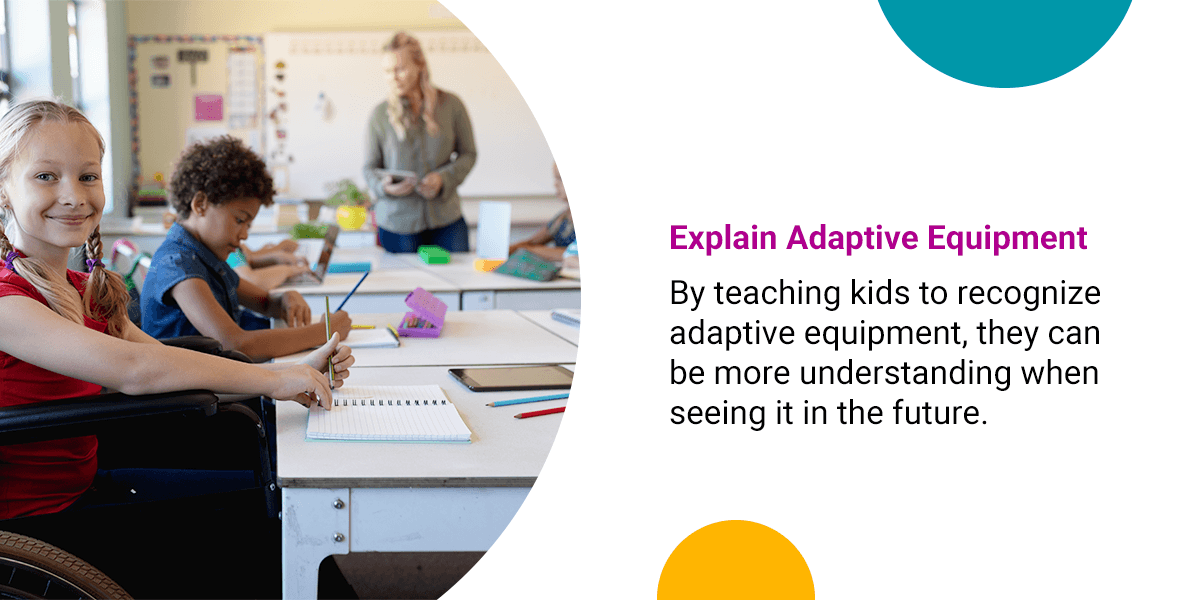
Explain to your kids what adaptive equipment is and how these devices help people with disabilities. Teaching kids about these tools can help them understand capability equipment better and treat their peers with respect.
You can start by listing common adaptive equipment that kids may see in the classroom, such as:
- Augmentative and Alternative Communication devices
- Crutches
- Hearing aids
- Canes
- Scooters
- Wheelchairs
You can also teach them about accessibility features for people with disabilities, like wheelchair ramps and designated parking spaces.
9. Make Sure Kids Ask Before Helping a Student With Disabilities
Many kids like to be helpers at school. From wanting to be the line leader to volunteering to pass out materials, these children want to assist their peers and teachers in any way they can. However, it’s important to teach your students to ask before trying to aid a child with a disability. Trying to help without permission can worsen the situation.
For example, when a child with functional needs gets upset, a student may want to comfort them with a hug. However, a hug can make the child feel more uncomfortable instead of comforted.
Instead, you can teach your students to ask before jumping in with assistance. A child can either ask their teacher or ask their classmate, “Is there anything I can do to help?”. Asking first helps empower people with disabilities to set boundaries and accept the help they need.
10. Focus on Similarities
Instead of only explaining the differences, point out shared interests or traits between people with disabilities and everyone else. You could talk about similarities like:
- Favorite subjects
- Common hobbies
- Hair colors
- Favorite foods
As kids realize what they have in common with people with disabilities, it becomes easier to relate to them, which can help with empathy development — encouraging kids to experience someone else’s point of view.
Empower Your Students With Assistive Technology Products and Classroom Kits From Enabling Devices
Since 1978, Enabling Devices has supported special education teachers, parents of children with disabilities, and individuals with functional needs. Our products help students with special needs fully participate in the world, including the classroom and at home. We are passionate about helping people lead fulfilling lives and engage with the world.
Ready to help your student or child succeed in the classroom? Browse our wide selection of products online or contact one of our representatives for help finding what you need.